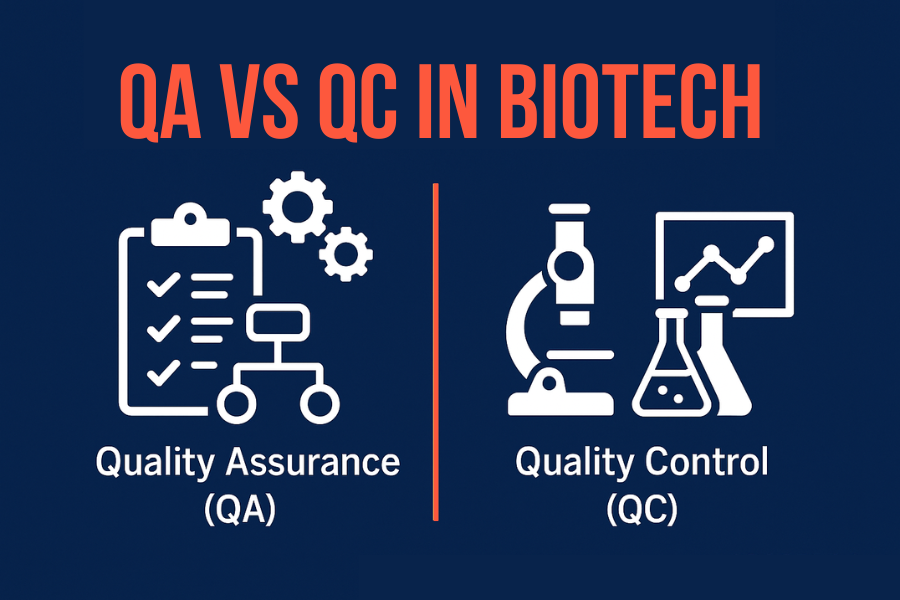
Quality Assurance (QA) and Quality Control (QC) are two of the most in-demand career paths in biotechnology, pharmaceuticals, medical devices, and clinical research. Yet many job seekers are unsure about the difference between the two — or which path is right for them.
If you’re exploring QA vs QC jobs in biotech, this guide explains the roles, responsibilities, salary ranges, and long-term career paths across Asia-Pacific.
1. What Is Quality Assurance (QA) in Biotech?
Quality Assurance focuses on processes, systems, and compliance. QA ensures that biotech products are developed, manufactured, and tested according to regulations before problems occur.
Typical QA Responsibilities:
- Developing and maintaining Quality Management Systems (QMS)
- Ensuring compliance with GMP, GCP, GDP, ISO 13485
- Reviewing SOPs, deviations, CAPAs, and change controls
- Supporting audits and inspections
- Training teams on quality standards
- Risk assessment and documentation oversight
QA is often described as preventive quality.
2. What Is Quality Control (QC) in Biotech?
Quality Control focuses on testing and verification. QC ensures that products meet specifications before they are released.
Typical QC Responsibilities:
- Performing laboratory testing (HPLC, LCMS, ELISA, PCR)
- Sampling raw materials and finished products
- Analyzing results and reporting deviations
- Maintaining laboratory instruments
- Following test methods and SOPs
- Supporting batch release decisions
QC is considered detective quality — identifying issues through testing.
3. QA vs QC: Key Differences
Quality Assurance
- Process-focused
- Documentation-heavy
- Less lab work
- Strong regulatory involvement
- Cross-functional exposure
Quality Control
- Lab-focused
- Instrumentation and testing
- More hands-on technical work
- Routine analysis
- Clear testing deliverables
Both are essential — but require different personalities and skill sets.
4. QA and QC Job Titles in Biotech
Common QA Titles:
- Quality Assurance Associate
- QA Specialist
- Quality Systems Specialist
- QA Manager
- Validation Specialist
- Compliance Officer
Common QC Titles:
- QC Analyst
- Laboratory Analyst
- Analytical Chemist
- QC Scientist
- Stability Analyst
5. QA vs QC Salaries in APAC (2026)
Entry-Level:
QC Analyst: SG$3,500 – SG$5,000 / RM 3,000 – RM 4,500 / AU$60,000 – AU$80,000
QA Associate: SG$4,000 – SG$5,500 / RM 3,500 – RM 5,000 / AU$65,000 – AU$85,000
Mid-Level:
QC Scientist: SG$6,000 – SG$8,000 / AU$90,000 – AU$115,000
QA Specialist: SG$6,500 – SG$9,000 / AU$95,000 – AU$120,000
Senior Roles:
QC Manager: SG$9,000 – SG$12,000+ / AU$120,000 – AU$145,000+
QA Manager: SG$10,000 – SG$15,000+ / AU$130,000 – AU$160,000+
QA roles often scale faster in salary due to higher regulatory responsibility.
6. Which Career Path Is Better: QA or QC?
Choose QC if you:
- Enjoy laboratory work
- Like data and instrumentation
- Prefer hands-on science
- Want a technical specialist path
Choose QA if you:
- Prefer documentation and systems
- Enjoy audits and compliance
- Want broader business exposure
- Aim for leadership roles
Many professionals start in QC and transition into QA later.
7. How to Move from QC to QA
Common transition steps:
- Get GMP and QMS training
- Assist with deviations and CAPAs
- Participate in audits
- Learn regulatory guidelines
- Apply for hybrid QC/QA roles
This is a very common and successful career move.
8. Where to Find QA & QC Jobs in APAC
QA and QC roles are consistently in demand across:
- Biopharmaceutical manufacturing
- Medical device companies
- CROs
- Diagnostics labs
- Contract testing labs
Browse current QA and QC roles across APAC here:
👉 https://apacbiojobs.com/jobs/quality-assurance-control
Conclusion
Quality Assurance and Quality Control careers offer stability, strong salaries, and long-term growth in biotech and life sciences. Understanding the difference helps you choose the path that aligns with your skills and career goals.
Explore the latest QA and QC opportunities across Asia-Pacific on APACBioJobs.com.