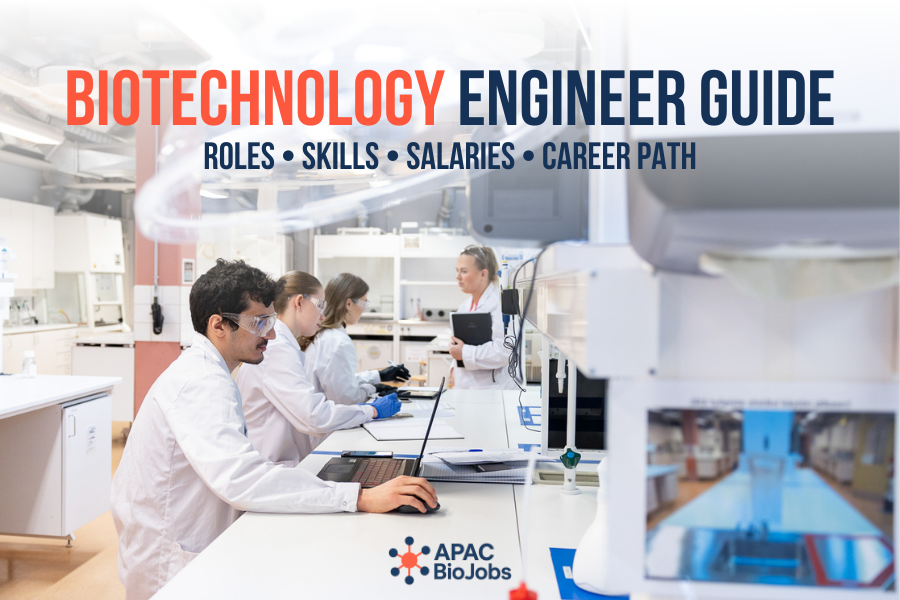
Biotechnology engineers play one of the most important roles in modern science — combining biology, chemistry, and engineering to design solutions that improve human health, agriculture, and the environment.
In Asia-Pacific, demand for biotechnology engineers continues to rise across biopharma, medical devices, biomanufacturing, clinical diagnostics, and industrial biotech.
Whether you're a student, recent graduate, or an experienced engineer considering a switch to biotech, this guide covers everything you need to know.
1. What Does a Biotechnology Engineer Do?
A biotechnology engineer applies engineering principles to biological systems. Depending on the company and industry, responsibilities may include:
Common Responsibilities
- Designing and optimizing bioprocessing systems
- Developing laboratory automation workflows
- Improving cell culture, fermentation, or purification processes
- Designing medical device components or test methods
- Ensuring products meet regulatory and quality standards
- Troubleshooting manufacturing or testing issues
- Validating equipment and processes
- Supporting R&D teams with experimental setups
- Analyzing data and preparing technical reports
Biotechnology engineering spans multiple industries — which is why the role varies widely across APAC.
2. Where Biotechnology Engineers Work in APAC
Biotechnology engineers are in demand across:
Biopharma & Pharmaceuticals
- Production system design
- Upstream/downstream process optimization
- Scale-up engineering
- Fill-and-finish operations
Medical Devices & MedTech
- Device design
- Validation & verification
- Risk management
- Usability engineering
- Firmware/mechanical/electrical engineering (hybrid roles)
Diagnostics & Laboratory Technology
- Automation systems
- Analytical instrument development
- Microfluidics & biosensor engineering
Industrial & Environmental Biotech
- Fermentation systems
- Bioplastics
- Enzyme technology
- Waste-to-energy solutions
3. Key Skills Required for Biotechnology Engineers
Technical Skills
- Bioprocess engineering (USP/DSP)
- Cell culture, fermentation, purification
- GMP & ISO 13485
- CAD or design software (SolidWorks, AutoCAD)
- Data analysis (Python, MATLAB, R)
- Equipment validation (IQ/OQ/PQ)
- Risk management (FMEA, HAZOP)
- Instrumentation & automation basics
- Microfluidics or biosensor development (for diagnostics roles)
Soft Skills
- Analytical thinking
- Problem-solving
- Communication
- Documentation accuracy
- Cross-functional collaboration
- Ability to work in regulated environments
4. Biotechnology Engineer Salaries in APAC (2026)
While compensation varies by country, here are typical salary ranges:
Entry-Level Biotechnology Engineer
- Singapore: SG$45,000 – SG$65,000
- Malaysia: MYR 42,000 – MYR 72,000
- Australia: AU$60,000 – AU$85,000
- Japan: ¥4.2M – ¥6.0M
- India: ₹350,000 – ₹700,000
Mid-Level Biotechnology Engineer
- SG$70,000 – SG$100,000
- MYR 75,000 – MYR 120,000
- AU$85,000 – AU$120,000
Senior Engineer / Lead
- SG$110,000 – SG$150,000
- AU$120,000 – AU$160,000
- Japan: ¥7M – ¥10M
MedTech engineering roles (ResMed, Philips, Siemens Healthineers, BD) often pay at the higher end.
5. How to Become a Biotechnology Engineer
Recommended Degrees
- Biotechnology Engineering
- Biomedical Engineering
- Chemical Engineering
- Mechanical/Electrical Engineering (with biotech experience)
- Molecular Biology (with strong technical experience)
Helpful Certifications
- Six Sigma Green Belt
- GMP/GDP training
- ISO 13485
- Basic Python/R for data analysis
- Design Control for medical devices
Internships & Projects Matter
Hiring teams want candidates who can point to:
- Lab automation projects
- Capstone engineering designs
- Bioprocess designs or optimizations
- Device prototypes
- Actual hands-on lab or manufacturing experience
6. Career Path for Biotechnology Engineers
Here’s the typical growth path:
Entry Level
- Associate Engineer
- Process Engineer I
- R&D Engineer I
Mid Level
- Process Engineer II
- Validation Engineer
- Manufacturing Engineer
- Product Development Engineer
Senior Level
- Senior R&D Engineer
- Lead Engineer
- Engineering Manager
- Principal Engineer
Advanced Roles
With experience, many biotechnology engineers move into:
- Regulatory Affairs
- Quality Assurance
- Product Management
- Technical Project Management
- Clinical Affairs
- Commercial/Technical Sales (high-paying path)
7. Where to Find Biotechnology Engineer Jobs in APAC
Biotech engineering roles are among the fastest-growing categories on APACBioJobs, especially in:
Singapore
MedTech engineering, diagnostics, device design.
Malaysia
Biomanufacturing, process engineering, QC/QA.
Australia
Medical device R&D, clinical technology.
India
Digital health engineering, device software integration.
Browse current listings here:
👉 https://apacbiojobs.com/jobs
Conclusion
Biotechnology engineering is one of the most dynamic and rewarding career paths in APAC. With rising demand in MedTech, diagnostics, biomanufacturing, and digital health, the opportunities for skilled engineers have never been greater.
If you want to explore the latest openings, visit APACBioJobs.com — updated daily with engineering roles across the Asia-Pacific region.